Comet ISON's Trial By Fire
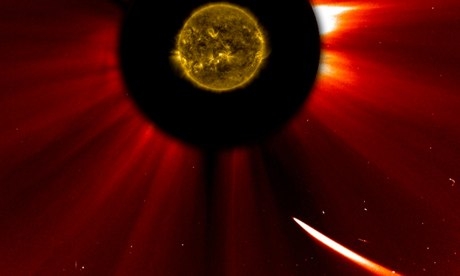
Over the weekend, people around the world have been following the progress of Comet ISON as it passed close by the Sun. The 2-mile radius comet was discovered last year, and has been steadily brightening as it approached perihelion, coming within two solar radii of the Sun itself. We talked about SOHO, the Solar and Heliospheric Observatory, back in Jason Byrne's guest post on the Sun , and they have some amazing images available of the comet's progress:


Comets are rocky or icy clumps hurtling through space, visible to us because of the stream of matter they leave behind. The tail of a comet, which is the bright and visible part, is created by pressure from solar radiation and wind knocking debris off the comet into a long ribbon behind it. The solar effects get stronger as the comet gets nearer to the Sun, so the comet becomes more visible (as ISON did). Sadly, the
temperatures of around
2,700°C temperatures that ISON encountered on its close solar approach appear to have broken the rocky core of the comet into several pieces, which has dimmed the comet significantly. The pieces are all travelling together along the same path, though, which initially caused speculation that the comet had survived.
Comet ISON is currently visible in the pre-dawn sky, from 6:30 AM or so in Ireland, if you look to the east-southeast. Astronomers don't yet know if it will be visible to the naked eye, but if you have binoculars or a small telescope, you may be able to spot its tail pointing straight up into the sky.
